Physical Address
304 North Cardinal St.
Dorchester Center, MA 02124
Physical Address
304 North Cardinal St.
Dorchester Center, MA 02124

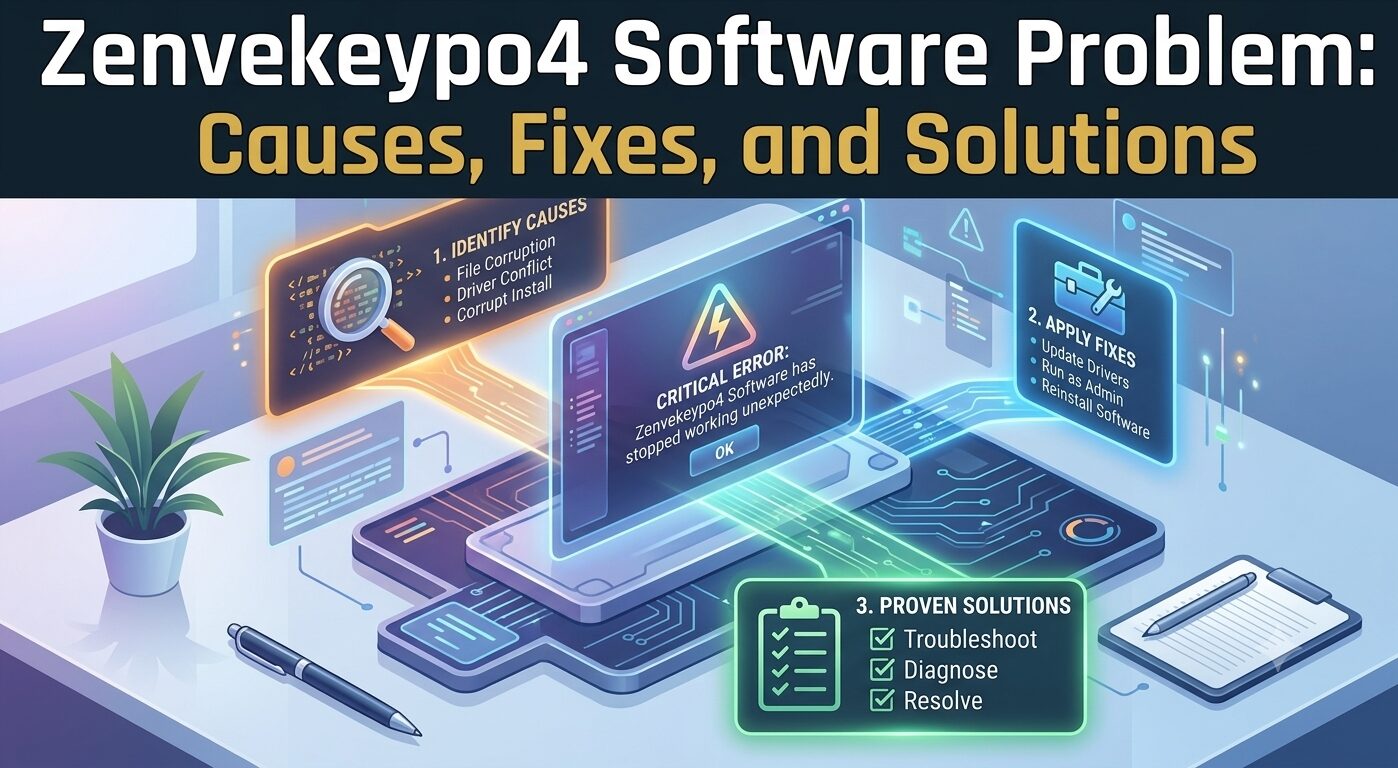
If you are seeing a sudden alert, pop-up, crash message, or search result about a zenvekeypo4 software problem, the most important first step is not to panic. The phrase looks technical, but that does not automatically mean you have a legitimate application error. In many cases, unfamiliar software names appear in browser pop-ups, misleading ads, unwanted notifications, or scam-style warnings that try to push users into clicking a link, downloading a “fix,” calling a number, or granting remote access.
This guide walks you through a safe, practical way to diagnose the issue, clean up your device, and prevent it from coming back. It is written for everyday users, but the steps are cautious enough for work devices too. If you are troubleshooting a business computer, school laptop, or managed device, check with your IT team before uninstalling software, changing security settings, or resetting the system.
Before trying to “fix” anything, treat any unfamiliar warning as potentially suspicious. The Federal Trade Commission warns that scammers often use fake pop-ups or messages about computer problems to pressure people into calling a number, clicking a link, paying for support, or giving remote access. Real support providers should be contacted through official websites, receipts, account portals, or known support channels—not through a phone number shown inside a scary pop-up. (ftc.gov)
Do this first:
If you already clicked something, downloaded a file, paid money, shared credentials, or allowed remote access, skip ahead to the section on what to do after interacting with the alert.

A problem in zenvekeypo4 software may not refer to a real installed program at all. It could be one of several different things:
That distinction matters. If the message appears only inside a browser tab, it is usually handled differently from a real application crash. If it appears as a desktop notification, the problem may be site permissions or notification abuse. If it appears in your installed apps list, you may be dealing with unwanted software or a legitimate but unknown program that needs verification.
Start by locating the source of the message. This one step prevents a lot of unnecessary changes.
Ask yourself:
If the warning includes urgent language like “your device is locked,” “call support now,” “all files will be deleted,” or “your banking data is exposed,” be extra cautious. Scam-style warnings often rely on fear and urgency. The FTC notes that fake pop-up warnings can imitate well-known companies and pressure users to call a number or take immediate action. (consumer.ftc.gov)
If the message is in a browser tab, do not interact with the page. Try closing the tab normally. If the page prevents you from closing it, force-close the browser.
On Windows:
On macOS:
On mobile:
If the same page returns every time, clear recent browser data and check startup pages, extensions, and notification permissions.
Many recurring “software problem” alerts are not full malware infections. They may be browser notifications from a website you accidentally allowed. These notifications can look like system alerts, even when they are simply coming from a browser.
Check your browser settings for sites allowed to send notifications. Remove unfamiliar domains, especially ones you do not recognize or that appeared around the time the zenvekeypo4 software problem began. Google’s Chrome guidance for unwanted ads, pop-ups, and malware recommends removing unwanted apps, checking suspicious settings, and downloading software from official sources rather than pop-up prompts. (support.google.com)
Also review:
In Safari, Apple notes that some pop-ups use phishing tactics and may pretend to come from Apple or another trusted company to trick users into sharing personal or financial information. (support.apple.com)
Extensions can change how websites load, inject ads, redirect searches, or display unwanted warnings. Even a once-useful extension can become risky if it changes ownership, gets compromised, or requests more permissions than it needs.
Open your browser’s extension manager and look for:
Disable suspicious extensions first. Then restart the browser and test. If the issue disappears, remove the extension completely. If you rely on an extension for work, confirm it is legitimate before deleting it.
If the alert appears outside the browser or returns after browser cleanup, inspect installed applications.
On Windows:
On macOS:
On Android or iOS:
Do not delete random system files or processes just because their names look unfamiliar. Operating systems use many technical process names. When in doubt, search through official vendor resources, contact support, or ask an IT professional.
After browser and app checks, run a full device scan using built-in security tools or reputable security software. On Windows, Microsoft recommends keeping security intelligence up to date and running a full scan with Microsoft Defender Antivirus when dealing with unwanted software concerns. (support.microsoft.com)
A good scan routine looks like this:
For severe symptoms—such as repeated downloads, unknown admin prompts, disabled security tools, or browser hijacking—consider using an offline scan option or contacting a qualified technician.

Outdated software can make troubleshooting harder. Updates often include security fixes, compatibility improvements, and bug repairs. However, only update through trusted channels.
Use:
Avoid:
If Zenvekeypo4 is not software you knowingly installed, you do not need a special “Zenvekeypo4 fixer.” You need to identify the source of the message and remove the cause safely.
There is one exception: if you can verify that Zenvekeypo4 is a real program you intentionally installed from a trusted vendor, then the problem may be a normal software issue rather than a scam or unwanted alert.
In that case, troubleshoot it like any other application:
Do not download a repair file from a search ad, pop-up, or unfamiliar website. If the vendor cannot be verified, treat the software as untrusted.
Because the term may appear in different contexts, the cause can vary. Here are the most common possibilities.
This is the most urgent scenario. A page may claim your device has a critical issue and tell you to call a number. Do not call it. The FTC advises users not to use phone numbers included in unexpected computer-warning messages and to contact security software companies directly through known, official channels if they are concerned. (ftc.gov)
You may have allowed notifications from a site that later sends fake warnings. The fix is usually to revoke notification permissions, clear site data, and block pop-ups.
A browser extension may be injecting alerts, redirecting pages, or changing search results. Disable extensions one by one to identify the source.
Microsoft describes potentially unwanted applications as software that may slow a machine, show unexpected ads, or install other annoying or harmful software. If the warning started after installing a free utility, converter, media downloader, or unofficial installer, review recent apps carefully. (support.microsoft.com)
Sometimes the browser keeps reopening the same bad page because it restored the previous session or cached site data. Clearing recent browsing data and resetting browser settings may help.
If you know the software is legitimate, the issue may come from a failed update, missing dependency, permissions conflict, damaged installation, or incompatible operating system update.
Close the tab, force-quit the browser if needed, and reopen without restoring the session. Then remove suspicious extensions, revoke notification permissions, clear site data, and update the browser.
Open browser notification settings and remove unfamiliar websites from the allowed list. Also check operating system notification settings for unknown apps.
Uninstall it through normal system settings. Restart the device. Run a full security scan. If it returns, check startup apps, browser extensions, scheduled tasks, login items, and recently downloaded installers.
Reset the browser’s search engine, homepage, and startup tabs. Remove extensions that control search settings. If the issue persists, create a fresh browser profile or reset browser settings.
Do not open it. Delete the file if it has not been run. If you already ran it, disconnect from the internet, run a full security scan, check installed apps, and consider changing passwords from a clean device.
Disconnect from the internet immediately. End the remote session. Shut down the device if you cannot regain control. From a separate trusted device, change passwords for email, banking, cloud storage, and important accounts. Contact your bank or card provider if payment information was shared. Report suspected fraud through the appropriate consumer protection or law enforcement channels.
Stop using the device and contact a professional. Do not pay anyone based on a pop-up message. If it is a work device, notify IT or security staff immediately.
Good notes make troubleshooting much faster. Capture:
If you contact support, use a trusted channel. Do not rely on the phone number, chat box, or link shown in the warning itself.
Prevention is mostly about reducing exposure to bad prompts, untrusted downloads, and unnecessary permissions.
Use these habits:
For small businesses, it is worth creating a simple rule: if an employee sees a warning that asks them to call support, pay money, install software, or grant remote access, they should stop and report it internally before doing anything else.
Contact official support, your IT team, or a qualified technician if:
If there is any chance that account credentials were exposed, change passwords from a separate trusted device and enable multi-factor authentication. If financial information was shared, contact your bank or card provider promptly.
If you want the short version, follow this order:
Not necessarily. The phrase may appear in fake alerts, browser notifications, search results, or unverified downloads. Treat it as suspicious until you can verify the source. The safest response is to avoid interacting with the warning and troubleshoot the browser, installed apps, and security status.
No, not unless you can verify it comes from a trusted official vendor for software you intentionally installed. Random repair tools promoted through pop-ups or unfamiliar websites can create more risk than the original warning.
Common reasons include allowed browser notifications, a restored browser session, a suspicious extension, cached site data, an unwanted app, or a startup item that keeps relaunching the source.
A pop-up can make the browser feel locked by using full-screen mode, repeated dialogs, sound, or scary language. That does not always mean the whole computer is infected. Force-closing the browser and reopening it without restoring the session often breaks the loop.
End the call. Do not provide more information. If you shared payment details, contact your bank or card provider. If you allowed remote access, disconnect the device from the internet, run security checks, and change important passwords from a different trusted device.
The basic safety approach is the same: do not click the alert, check browser permissions, remove suspicious apps or extensions, update the device, and scan where supported. The exact menu names differ by platform.
Usually, no. Start with browser cleanup, app review, updates, and security scans. A reset may be appropriate if the device remains compromised, unknown admin access exists, security tools cannot run, or a professional recommends it after review.
The issue is likely resolved when the warning no longer appears after restart, browser notifications are clean, suspicious extensions are removed, security scans show no threats, and no unknown apps or startup items remain. Keep monitoring the device for a few days.
Share the exact message, screenshots, when it started, what you clicked, recent downloads, scan results, device type, operating system version, browser name, and whether anyone had remote access. The more specific you are, the easier it is to identify the real cause.
The safest way to handle a zenvekeypo4 software problem is to avoid assuming the warning is legitimate. First identify where it appears, then clean up the browser, review extensions and installed apps, run a full security scan, and update trusted software. If you interacted with the alert or the problem keeps returning, contact official support or a qualified professional rather than following instructions from the warning itself.

I am Muhammad Ali the founder and lead voice behind Techgory, a platform born out of a deep fascination with everyday technology and digital tools. Instead of relying on dense, confusing jargon, I focus on heavy research, hands-on testing, and breaking down complex tech into simple, actionable steps that anyone can understand.