Physical Address
304 North Cardinal St.
Dorchester Center, MA 02124
Physical Address
304 North Cardinal St.
Dorchester Center, MA 02124

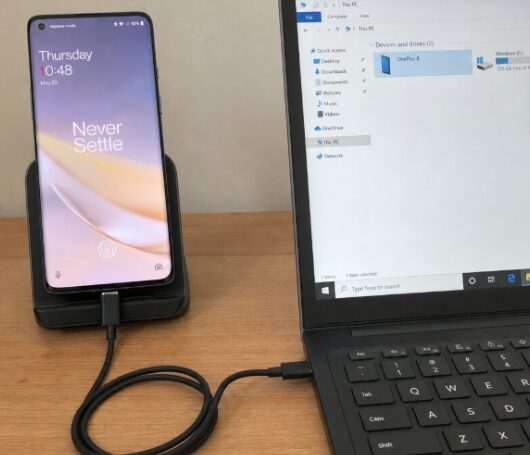
If your OnePlus 8 is not detected in EDL mode, your Windows pc usually needs the Qualcomm HS-USB QDLoader 9008 driver before flashing or recovery tools can communicate with the phone. This installation guide walks you through preparing your computer, installing the correct driver for Windows, checking Device Manager, and fixing the most common connection problems to unbrick your mobile device.
If you searched for “qdloader drive windows 11 oneplus 8,” you are likely looking to download Qualcomm HS-USB QDLoader 9008 software. The wording varies, but the goal is the same: help your Windows 11 computer recognize a OnePlus 8 or similar Android phones with Qualcomm chipsets when the device is in emergency download mode.
Important: Flashing stock firmware, using emergency download (EDL) mode, or modifying partitions can erase data or brick your device if done incorrectly. Back up anything important first, and only use files intended for your exact OnePlus 8 model.
The QDLoader driver allows a Windows PC to communicate with mobile devices running a Qualcomm processor when they enter emergency download mode, also known as Qualcomm 9008 mode. For the OnePlus 8, this mode is commonly used for advanced recovery, flashing stock ROM or firmware, or low-level service operations via USB.
Without the right USB driver, your phone-to-computer connection won’t work properly, and the device in emergency download may appear in Device Manager as:
Unknown USB device
QUSB_BULK
Qualcomm HS-USB Diagnostics
A device with a yellow warning icon
Nothing at all when you connect the phone
Installing the right OnePlus 8 drivers and the latest Qualcomm USB driver will ensure your laptop or PC is able to recognize the Qualcomm phone normally.
Prepare these items before starting the installation process:
A Windows pc (compatible with both 32-bit and 64-bit systems, though Windows 11 requires 64-bit).
A reliable USB cable that supports data transfer (connect directly via USB, avoiding hubs).
The latest version of the Qualcomm HS-USB QDLoader 9008 driver executable or setup files.
Basic setup configurations like enabling USB debugging and installing ADB / Fastboot tools if your phone can still boot.
A charged OnePlus 8 mobile device.
Before you download the Qualcomm drivers, connect your OnePlus 8 to the computer in normal boot mode:
Unlock the phone.
Connect the device to the computer using your USB cable.
Pull down the Android notification shade and ensure USB debugging or File Transfer is active if available.
Open Device Manager on Windows.
Look under sections such as Portable Devices, Android Device, Universal Serial Bus controllers, or Ports (COM & LPT).
If your OnePlus 8 appears normally, your basic USB driver files may already be installed. If the phone is only not detected in EDL mode, continue to the next step.
You may need two types of drivers for Android devices with Qualcomm chipsets:
OnePlus drivers for regular Android USB connection, file transfer, ADB, or Fastboot commands.
The specific Qualcomm HS-USB QDLoader 9008 driver for EDL / 9008 mode.
Make sure to download the Qualcomm driver package that matches your system architecture (64-bit for Windows 11). After downloading the executable setup or zip archive, extract it to a dedicated folder on your desktop so Windows can easily detect the files during setup.
Some QDLoader driver packages include a standard setup executable installer. If yours does, this is the simplest method:
Right-click the driver setup file.
Select Run as administrator.
Follow the installation guide prompts and choose the default settings.
Complete the installation and restart your computer.
Once you restart, Windows should be fully prepared to detect your Qualcomm device.
If the automated setup installer does not work, or if your phone still shows up as a generic device, you will need to install the driver manually using Device Manager:
Connect your OnePlus 8 to the PC via USB cable while it is in EDL mode.
Right-click the Windows Start button and select Device Manager.
Look for a device named QUSB_BULK or an unknown Qualcomm processor entry with a yellow warning icon.
Right-click that entry and select Update driver.
Choose Browse my computer for drivers.
Select the extracted folder containing your downloaded qdloader driver, check “Include subfolders”, and click Next.
To verify the installation:
Keep your OnePlus 8 connected in Qualcomm 9008 mode.
Open Device Manager and expand the Ports (COM & LPT) section.
Look for the entry: Qualcomm HS-USB QDLoader 9008 (COM3) (the exact COM port number may vary).
If you see this without any error symbols, your Windows PC is now able to recognize the phone for flashing firmware or unbricking via MSM download tools.
This usually means Windows sees the Qualcomm hardware but does not have the correct driver assigned. Right-click the QUSB_BULK device in Device Manager, select Update Driver, and manually point it to your extracted Qualcomm USB driver folder.
This typically indicates a driver signature enforcement issue on Windows 11. You may need to reboot your computer into Advanced Startup mode and temporarily disable driver signature enforcement to allow the driver to load correctly.
If no new device appears when you connect the phone to the computer:
Make sure you are using a high-quality data cable, not a charge-only cable.
Ensure the device is actually entering emergency download mode (holding Volume Up and Volume Down simultaneously while plugging it in).
Try switching to a different USB port on your laptop or PC.
While installing the driver is perfectly safe, working in EDL mode carries inherent risks:
Ensure your computer has a stable power source so it does not power down or restart during a command execution or firmware flash.
Never disconnect the USB cable while the MSM tool or flashing software is actively rewriting the stock firmware.
Always verify that the firmware package matches your specific OnePlus 8 regional variant to avoid a permanent brick.

I am Muhammad Ali the founder and lead voice behind Techgory, a platform born out of a deep fascination with everyday technology and digital tools. Instead of relying on dense, confusing jargon, I focus on heavy research, hands-on testing, and breaking down complex tech into simple, actionable steps that anyone can understand.